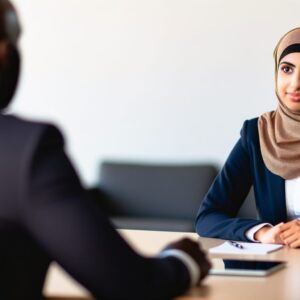
The Power of Body Language in Job Interviews

In today’s competitive job market, landing your dream job often hinges not only on your qualifications and experience but also on the subtle cues you convey during an interview. Among these, body language plays a pivotal role in shaping an interviewer’s perception of a candidate. The Power of Body Language in Job Interviews explores how nonverbal communication affects the interview process and can be leveraged to make a positive and lasting impression.
While resumes and cover letters detail your skills and accomplishments, the job interview offers a unique opportunity to demonstrate your interpersonal abilities, confidence, and cultural fit through both verbal and nonverbal means. According to research on interview strategies, interviewer evaluations are influenced not only by the content of responses but also by the candidate’s behavior unrelated to the job that nonetheless impacts the impression formed. This latter facet underscores the critical impact body language has during interviews.
This comprehensive article delves into the fundamentals of body language, how different nonverbal signals can be interpreted, and the specific importance of such cues in the context of employment interviews. Readers will discover practical insights into how aspects like posture, eye contact, gestures, and facial expressions communicate confidence, enthusiasm, and professionalism — or conversely, nervousness and disinterest. These elements can significantly shape the interview outcome.
Moreover, we consider cultural nuances and the balance between authenticity and strategic self-presentation. As job interviews can include multiple rounds with varying formats, including telephone and video interviews, understanding how body language translates across these platforms is essential for candidates today. By mastering effective body language, applicants can enhance their communication, better engage with interviewers, and improve their chances of being selected.
Join us on this in-depth exploration of body language’s power in the interview setting, providing a vital edge in your career advancement efforts. Whether you are a first-time job seeker or an experienced professional aiming to polish your interview skills, the knowledge shared here will help you make every gesture count.
Understanding the Basics of Body Language
Body language plays a crucial role in shaping the dynamics of a job interview, often revealing much more than words alone. When candidates enter an interview room, their nonverbal cues instantly communicate confidence, openness, and professionalism—or, conversely, nervousness, disinterest, and even dishonesty. These signals are quickly processed by interviewers, frequently impacting the outcome before a single verbal response is given.
For example, maintaining an upright posture conveys alertness and engagement, while slouching may suggest a lack of enthusiasm. Steady eye contact can project confidence and sincerity, whereas avoiding it might raise doubts about a candidate’s honesty or comfort level. Even seemingly small gestures—like nodding in agreement or using open hand movements—can foster a connection and signal receptiveness. Conversely, crossed arms or a rigid stance might create an impression of defensiveness or anxiety.
Research has shown that first impressions, often formed within the first few seconds, hinge heavily on body language. Experts note that nonverbal communication can either reinforce the spoken message or contradict it, thereby influencing interviewer perceptions and decisions. Moreover, since an interview combines both verbal and nonverbal elements, body language often complements responses, adding authenticity and emotional depth.
Understanding how your nonverbal signals function in an interview context helps you navigate complex social cues. Aligning your body language with your words ensures your overall message is coherent, increasing your chances of success. For more insights on interview formats and preparation, see understanding different interview formats.
The Role of Body Language in Job Interviews
Body language plays a crucial role in shaping the dynamics of a job interview, often influencing an interviewer’s perception even before a single word is spoken. Nonverbal cues such as a firm handshake, steady eye contact, and an upright posture can project confidence, signaling to employers that the candidate is prepared, capable, and eager to engage. Conversely, signs like slouched shoulders, lack of eye contact, or fidgeting can unintentionally convey nervousness, disinterest, or unease, potentially casting doubt on the applicant’s suitability for the role.
First impressions formed in the initial seconds of interaction are heavily rooted in body language. According to research by psychologist Albert Mehrabian, nonverbal communication accounts for up to 55% of the overall message conveyed in face-to-face encounters. This means that how a candidate holds themselves can reinforce or contradict their spoken responses, making body language an integral part of the decision-making process.
Interviewers assess candidates holistically, weighing verbal answers alongside nonverbal signals to evaluate professionalism and cultural fit. For example, a poised candidate who articulates their thoughts clearly while maintaining open gestures and warm facial expressions is more likely to be perceived as trustworthy and engaged. On the other hand, inconsistent or closed-off body language may raise red flags, suggesting hesitation or lack of authenticity. Understanding this interconnectedness is essential for candidates aiming to harness the full power of their presence during interviews. For practical strategies on mastering interview formats and making a strong impression, job seekers may find valuable insights in this guide to Understanding Different Interview Formats.
Key Body Language Tips to Impress Interviewers
Using body language effectively in job interviews can significantly elevate your presence and positively influence the interviewer’s perception. One of the most crucial tips is to maintain appropriate eye contact. This shows confidence and attentiveness, but be careful not to stare intensely, which can feel confrontational. Instead, hold steady contact for a few seconds at a time, then briefly glance away naturally.
Adopting an open and relaxed posture immediately signals approachability. Avoid crossing your arms or slouching, which can imply defensiveness or disinterest. Sit up straight with shoulders relaxed, feet flat on the floor, and hands visible to reinforce openness. Purposeful hand gestures can effectively emphasize key points, but avoid excessive movement that may distract or convey nervousness.
A genuine smile creates warmth and approachability, helping to establish rapport early on. Smiling when appropriate throughout the interview lightens the mood and shows enthusiasm for the role. Equally important is managing fidgeting or nervous habits like tapping fingers, shaking legs, or playing with a pen. These behaviors can distract the interviewer and suggest anxiety.
Subtly mirroring the interviewer’s body language, such as matching their gestures or posture, can foster a subconscious connection and build rapport. However, this technique should be natural and not forced.
For virtual interviews, maintain good posture and look directly into the camera instead of the screen to simulate eye contact. Ensure your face is well-lit and avoid looking away frequently, which can appear disengaged. Using these body language strategies will help you convey confidence, professionalism, and genuine interest in any interview setting.
For more tips on video interview setup and performance, see this guide on video interview tips, setup, performance, and common pitfalls.
Cultural Considerations and Avoiding Common Pitfalls
Body language is a powerful tool in job interviews, but its interpretation can vary widely across cultures, making awareness of these differences crucial for candidates. What may be considered confident and respectful in one culture might be interpreted as rude or disengaged in another. For example, while direct eye contact is often seen as a sign of confidence and honesty in Western cultures, in some Asian or Middle Eastern cultures, it can be perceived as confrontational or disrespectful. Similarly, gestures such as nodding or smiling have different meanings—what’s encouraging in one culture may be confusing or insincere in another.
Candidates interviewing in multicultural or international settings should research the cultural norms relevant to the interviewers’ backgrounds. This helps avoid misunderstandings and demonstrates cultural sensitivity, which can be a valuable asset in global or diverse workplaces.
Common body language mistakes to avoid include crossing arms, which can signal defensiveness or resistance; avoiding eye contact, often interpreted as evasiveness or lack of confidence; and excessive gesturing, which may be distracting or suggest nervousness. These nonverbal cues can overshadow even the most polished verbal responses.
Balancing authenticity with social awareness is essential. Candidates should remain true to themselves while adapting their body language to respect cultural expectations. Practicing mindful gestures and pauses can help present a positive yet genuine demeanor, ensuring that nonverbal signals support rather than contradict verbal communication during the interview process.
Integrating Verbal and Nonverbal Communication for Interview Success
Success in job interviews hinges not only on what candidates say but also on how they say it. Aligning body language with verbal communication forms a powerful synergy that creates a cohesive and compelling impression. When words express confidence and enthusiasm, but gestures and facial expressions betray nervousness or uncertainty, interviewers pick up on this incongruence. Such mixed signals can undermine credibility and reduce the effectiveness of even the most well-crafted answers.
Consistency between verbal and nonverbal cues is essential to convey authenticity and trustworthiness. Candidates should ensure their posture, eye contact, and hand movements reinforce the messages they articulate. For example, when describing teamwork skills, open gestures and leaning slightly forward can underscore approachability and engagement, amplifying the verbal content.
Preparation involves practicing body language alongside verbal responses. This can be done through mock interviews or video recordings to observe and refine subtle physical behaviors. Techniques such as controlled breathing, deliberate pauses, and purposeful movements help build confidence, making nonverbal communication feel natural rather than forced. A candidate trained in this alignment reduces the risk of sending conflicting signals that might distract or confuse the interviewer.
Mastering this integration extends beyond interviews, influencing ongoing professional interactions. Maintaining consistent nonverbal communication enhances presentations, meetings, and networking, fostering strong relationships and career growth. Developing this awareness contributes to a polished personal brand that resonates long after the interview concludes.
Concluding Insights on Body Language in Job Interviews
Effective body language is a powerful component of job interview success, serving as a silent but influential communicator of confidence, professionalism, and interpersonal skills. While qualifications open the door, nonverbal cues help candidates connect authentically with interviewers, reinforcing their suitability. By understanding the principles of body language, avoiding common mistakes, and integrating these with verbal responses, job seekers can significantly enhance their interview performance and improve hiring outcomes. Ultimately, mastering body language equips candidates not just for interviews but for enduring success in any professional interaction.
About the author